

The Baseline Disappears
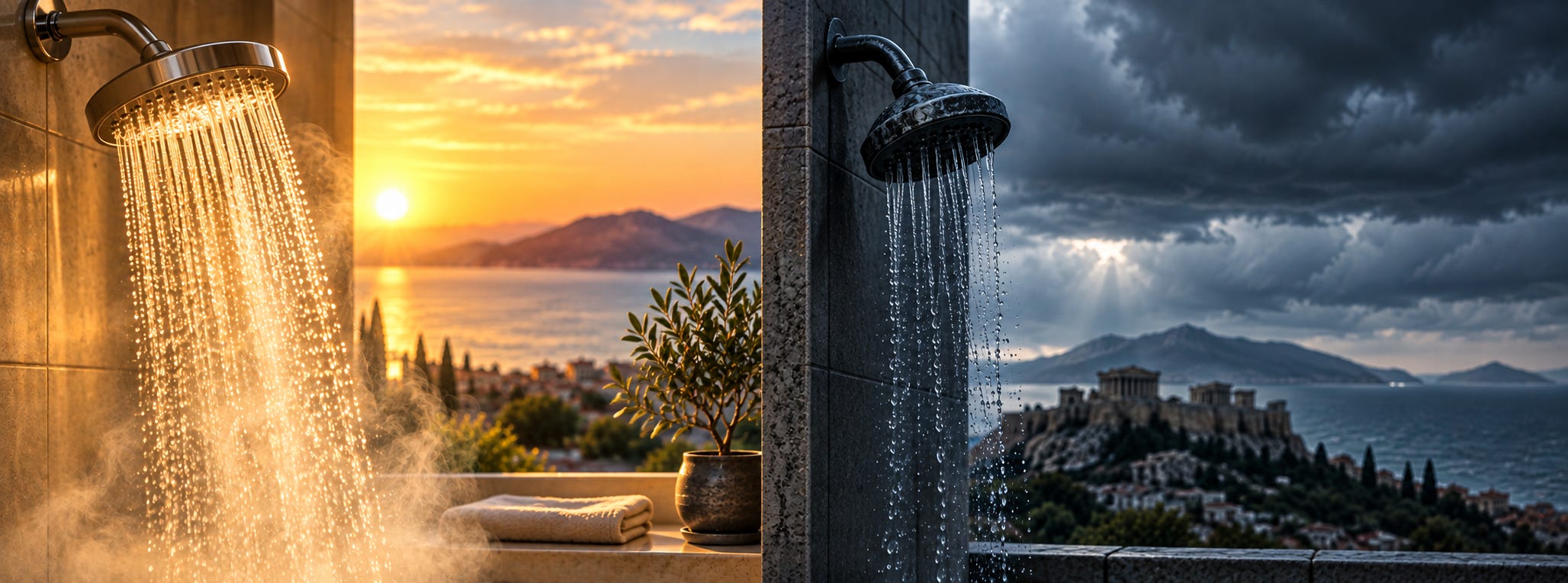
Suppose your water heater breaks tomorrow morning.
You turn on the shower, the water is cold, and immediately the day feels diminished. You are irritated. Plans are disrupted. Something that worked yesterday no longer works today, and the loss feels significant.
But what, exactly, has been lost?
For nearly all of human history, hot water on demand did not exist. Even the wealthy could not turn a handle and produce an endless stream of clean, heated water at any hour they pleased. Yet once that capability becomes ordinary, we stop experiencing it as extraordinary. It disappears into the baseline.
That is the trap.
Human beings adapt quickly to improvement—too quickly. What first feels like abundance soon feels normal. What feels normal soon feels expected. And once something becomes expected, its absence begins to feel like deprivation. Seneca describes the mechanism precisely:
“How many things are superfluous we fail to realize until they begin to be wanting; we merely used them not because we needed them but because we had them.”
—Seneca, Letters to Lucilius, 123.6
The problem is not that hot water, climate control, refrigeration, medicine, transportation, or instantaneous communication are bad. They are genuine advantages, and there is nothing Stoic about pretending otherwise. The problem begins when repeated possession changes our judgment of them. A benefit becomes an expectation, and expectation quietly hardens into necessity—into dependence.
Then Fortune removes one small convenience, and we react as though something essential has been taken from us. This is how abundance becomes invisible and dangerous to our character.
The modern world surrounds us with capabilities that would have been unimaginable to almost every human being who ever lived, yet familiarity prevents us from seeing them clearly. We notice the missing comfort far more readily than the hundred comforts still present.
Stoicism asks us to correct that judgment.
Not by rejecting comfort.
By remembering what it is.
Preference Becomes Dependence
Stoicism does not require us to pretend that hot water and cold water are equally desirable. Health is preferable to sickness, security to danger, sufficient wealth to poverty, and comfort to unnecessary discomfort. These are preferred indifferents: they have practical value, but they do not determine whether a person is good or whether a life is governed by virtue.
The danger begins when preference becomes dependence.
There is nothing wrong with preferring a hot shower. There is something wrong when the absence of one is sufficient to produce anger, self-pity, or a declaration that the day is ruined. At that point, the problem is no longer the water heater. The external has acquired authority over your judgment.
Epictetus states the principle plainly:
“It is not things themselves that disturb men, but their judgements about these things.”
—Epictetus, Enchiridion, §5
This does not mean that the Stoic leaves the water heater broken. Call the repairman. Replace it. Improve your circumstances when reason permits. Stoic indifference is not strategic neglect. The distinction is between acting to change an external and allowing your ability to live well to depend upon changing it.
The same progression occurs with larger things. Income becomes lifestyle, lifestyle becomes expectation, and expectation becomes something we believe we cannot live without. Convenience becomes routine, and routine becomes necessity. We gradually surrender pieces of our independence without noticing that we have done so.
Luxury becomes comfort. Comfort becomes expectation. Expectation becomes dependence.
The Strategic Stoic can prefer the external, pursue it, maintain it, and enjoy it. What he cannot afford to do is let preference quietly become servitude.
Reset the Baseline
If comfort can quietly become dependence, then the obvious response is to disturb the baseline before circumstance does it for you. Seneca recommended exactly this kind of deliberate rehearsal:
“Set aside a certain number of days, during which you shall be content with the scantiest and cheapest fare, with coarse and rough dress, saying to yourself the while: ‘Is this the condition that I feared?’”
—Seneca, Letters to Lucilius, 18.5
The point is not theatrical suffering. It is calibration.
Go without something you normally take for granted. Take the cold shower occasionally. Skip the climate control when conditions are merely uncomfortable rather than dangerous. Eat simply. Walk instead of driving when practical. Spend a day without entertainment. Travel lighter than usual. Delay a purchase you can easily afford. Allow yourself to be hungry for a while rather than immediately answering every appetite. Sleep somewhere less comfortable when the opportunity arises.
Do not manufacture injury, deprivation, or pointless misery. Choose small, controlled losses of comfort that expose what has quietly begun to control you. The test is simple: What ordinary convenience produces a disproportionate reaction when it disappears?
That reaction is useful information.
If a missed meal makes you irritable, hunger has more authority than you thought. If a cold room destroys your mood, temperature has acquired leverage. If losing internet access makes you anxious, connectivity may have crossed from useful tool into dependency. If you cannot tolerate inconvenience without complaint, then comfort is no longer merely something you prefer; it is something you need—it owns you.
This is why voluntary discomfort is strategically useful. It creates controlled exposure to diminished conditions while the stakes are low. You discover dependencies before circumstances expose them for you, and you practice functioning without things Fortune may eventually remove anyway.
Seneca makes the strategic purpose explicit immediately afterward:
“In days of peace the soldier performs manoeuvres, throws up earthworks with no enemy in sight, and wearies himself by gratuitous toil, in order that he may be equal to unavoidable toil.”
—Seneca, Letters to Lucilius, 18.6
That is the model. Do not wait for the power outage, financial setback, illness, travel disruption, broken appliance, or genuine hardship to discover that ordinary comfort has made you fragile.
Periodically remove the comfort from yourself. Find out what remains.
Abundance Without Servitude
The answer is not to reject modern comfort. That would be foolish.
Use the hot water. Use the medicine. Use the air conditioning, the refrigerator, the car, the internet, the savings account, the technology, and every other advantage available to you. Build reserves. Improve your circumstances. Protect your health. Increase your capability.
Stoicism does not require poverty. Strategic Stoicism certainly does not require weakness and, in fact, rejects it.
The objective is to enjoy abundance without becoming dependent upon it.
That means periodically asking a hard question: If this disappeared tomorrow, would I merely be inconvenienced, or would I become less capable of governing myself?
A Strategic Stoic should be able to use externals aggressively without surrendering sovereignty to them. Wealth can create options. Technology can create leverage. Comfort can preserve energy. Good tools can make duty easier. None of those things are problems unless they cross the line from resource into master.
This is why deliberate discomfort matters. It is not an aesthetic rejection of modern life. It is a diagnostic. It tells you whether your preferences remain preferences.
Not because hardship is noble.
Because fragility is expensive.
The Strategic Stoic does not seek suffering. He seeks freedom from unnecessary dependence. He uses comfort when it is available and remains capable when it is not.
That is the proper relationship with abundance.
Use it fully. Appreciate it clearly. Prepare to lose it. Never let it rule you.